Come ride with me!
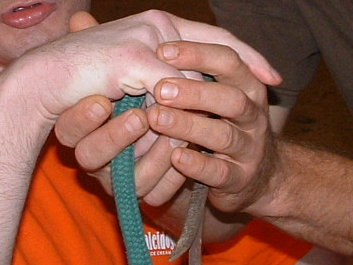
Therapeutic Riding combines gentle equestrian techniques with physical therapy. The progressive, rhythmic motion of a horse stimulates the body and works the muscles of the rider in a manner similar to that of the human stride. The power and warmth of the horse can help strengthen and tone the rider’s muscles, improve balance, flexibility, head control and eye/hand coordination. Concentration, patience and self‐esteem improve as the rider focuses on the responsibility of safely guiding an 1100 pound horse. As the legs of these beautiful animals become the legs of our riders, they are permitted a sense of freedom and mobility seldom experience elsewhere in their lives.
For many centuries, riding was used mainly as a source of transportation. In more recent years, it has become not only a form of recreation, but also a highly effective form of therapy. This type of riding uses equine- oriented activities for the purpose of contributing positively to the cognitive, physical, emotional and social well being of people with disabilities.
Participants develop and strengthen muscles by performing physical tasks with the horse. The horse stimulates the rider's pelvis and trunk in a manner that closely resembles the normal gait (walk) of an individual, working specific muscle groups.
Participants have an opportunity to explore movement patterns and develop skills. The quality and quantity of movement experiences relates to the development of movement patterns such as walking, running and jumping.
Participants develop the ability to maintain gross motor balance and to move more rhythmically with the horse. Participants will start to interpret and react to the horse's movement.
Participants gain a better understanding of their body in space, and begin to distinguish between right, left, forward and backwards.
The participants develop the ability to locate and identify parts of the horse's body, this will aid in developing awareness and understanding of his/her own body.
Participants develop an awareness of time concepts and will develop the ability to perform tasks in sequential order.
Participants develop the ability to use judgment and reasoning in riding and working with the horses. This will enhance his/her ability to use judgment and reasoning when dealing/interacting with situations and changes in the environment.
Participants learn and practice the process of problem solving. Problem solving occurs when participants work to accomplish a specific goal/skill.
Communication skills improve because clear communication between horse and rider at the verbal and non- verbal level is the only means to an effective working relationship in riding. As riding is usually a group activity, the students must also be able to communicate with peers, volunteers and the instructor.
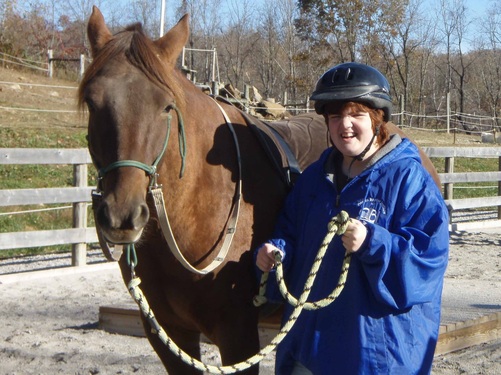
With the World Equestrian Games coming to Kentucky in just a few months there has been much attention placed on the horse. Horses are powerful animals adapted for a variety of tasks. They are particularly useful as therapy animals. Our daughter, Hayley, participates in weekly riding therapy. Hayley was diagnosed with autism spectrum disorder with developmental delays and has been receiving various services and therapies since she was three years old. Nothing has helped her as significantly as therapeutic horseback riding.
I had often heard about therapeutic horseback riding and its amazing benefits for disabled people. However, when I looked into it the programs were too far away and too expensive. Living in southeastern Kentucky has made it difficult to participate in many activities that would be beneficial for Hayley. There are a limited number of services that are offered in this part of the state. I often hear of wonderful opportunities in Lexington, Louisville, and Cincinnati but we simply cannot afford to travel that far very often. There have been many times that I have wondered how much farther along Hayley would have progressed if these services were more readily available to her. So when a friend of mine showed me an article a few years ago about a couple starting a riding program in Jackson County I was very excited!
Mark and Cheryl Martin began Appalachian Foothills Therapeutic Equestrian Center (now KFTHC) to help the disabled community in Southeastern Kentucky. On Saturdays during riding season they and their tremendous group of volunteers provide riding/therapy lessons for anyone, young or old, who would benefit from it. Hayley has been riding for several years now and it’s her absolute favorite thing to do. She has no real concept of time but somehow she knows when it’s a riding day and it’s a challenge to keep her in the house until it’s time to go.
We have seen the many benefits riding has provided for Hayley. Her posture and balance have improved by leaps and bounds. Her muscle tone and strength have increased. Once she is up on the horse her verbal skills just flow. She is never as talkative as when she is riding around the arena on her beloved Woody. She gets a case of the giggles and doesn’t stop until they tell her it’s time to dismount. It is quite an accomplishment for a young lady who struggles with simple tasks on a daily basis!
We cannot adequately express the gratitude we feel towards Cheryl and Mark Martin and their wonderful team of volunteers who make this a reality for us. It is worth the seventy‐five minute drive and the car sickness from the curvy roads to see my daughter’s face light up with pure joy every time she rides!
– Sharon, Hayley’s Mom
Kentucky Foothills Therapeutic Center
Copyright © 2026 All Rights Reserved.